Hail History by City: How Often It Hails in 45 US Cities
Days with damaging hail each year from 2016 to 2025 in 45 large US cities, the largest stones on record and what to do about your roof after a storm, from National Weather Service reports.
Updated
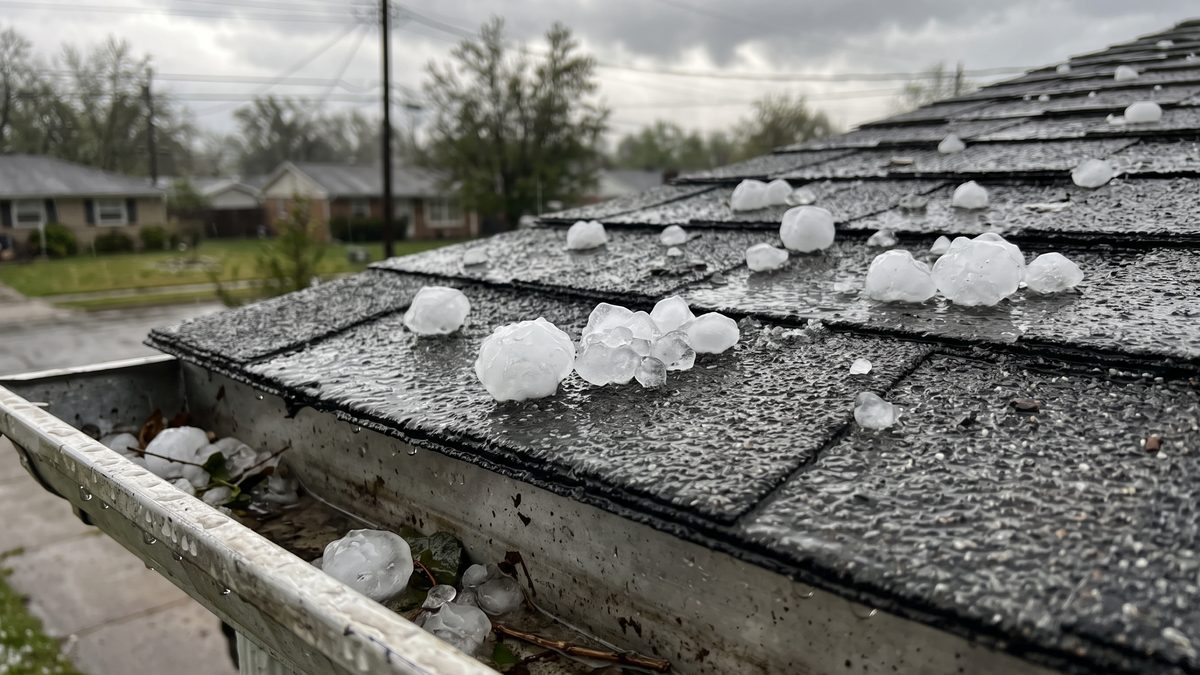
How often your roof gets hit by hail depends almost entirely on where you live. We counted every hail report the National Weather Service logged within 15 miles of the center of 45 large cities in the ten years from 2016 to 2025. Colorado Springs had 85 days with hail of 1 inch or larger, the size forecasters call severe. Oklahoma City had 76 and Fort Worth had 59. In 9 of the 45 cities, all of them on the West Coast, there was not one.
Pick your city's hail record
Pick a city to see how many days it had severe hail each year, the largest stone on record since 2016 and the most recent storms.
Days with hail of 1 inch or larger, by year
Ten full years. Reports from 2026 are still reaching the database and are not counted here. The ones already published appear under most recent severe hail.
Show the numbers as a table
Largest stone, next to things you know
Latest dates of severe hail
Which of the 45 cities gets hit hardest
Days with hail of 1 inch or larger within 15 miles of the city center, 2016 to 2025. Select a city to see its history above.
Hail hit your street: the yard check and the claim
Dents you can see from the yard
You do not need to climb on the roof, and you should not. Hail that was big enough to hurt shingles leaves marks on softer things you can see from the yard.
- Gutters, downspouts and roof vents: look for fresh round dents.
- The fins on the outdoor air conditioner unit: hail flattens them in patches.
- Window screens, mailbox, grill cover, fence caps: small tears and dings.
- The end of each downspout: a pile of dark shingle granules after the storm.
- Write down the date and time. The storm date is the first thing an insurer and a roofer will ask for, and the list above shows the dates on record for your city.
Filing with your insurer
This is the advice the Texas Department of Insurance gives homeowners after hail. It is sound in any state.
- File as soon as you can, and take photos and video of everything before anything is moved.
- Stop further damage. Cover holes and broken windows, and keep the receipts. Your policy may pay for temporary repairs.
- Be home when the adjuster comes, and keep a list of everyone you talk to at the insurance company.
- Get more than one written estimate. Do not pay in full up front, and do not make the final payment until the work is done.
- Never sign a contract that has blank spaces.
The offer to absorb your deductible
After a big storm, crews go door to door. Some offer to waive or rebate your insurance deductible. In Texas that is illegal under state law, and your insurer can ask for proof that you paid it. A contractor who absorbs the deductible has to make the money back somewhere, usually in the materials or in the bill sent to your insurer.
Quarter-size and up: how the days were counted
Every figure on this page comes from the Storm Events Database of NOAA's National Centers for Environmental Information, which collects the reports the National Weather Service verifies: time, place and the diameter of the largest stone. We kept the hail reports that fall within 15 miles of each city center and counted days, not reports, so a storm that was reported by twenty people counts once.
Two limits matter. A report is one point on the map, so a storm on the list may have missed your street, and hail may have hit your street on a day nobody reported it. And big, dense cities have more people to send reports than open country does. Use the history to know how exposed your city is and to pin down a storm date. Whether your own roof was damaged is something only an inspection can answer.
Hail of 1 inch across, the size of a quarter, is the point where the Weather Service calls a storm severe. The size names in the chart are the ones its Storm Prediction Center uses.
Where the hail counts come from
| Source | What we took from it |
|---|---|
| NOAA NCEI, Storm Events Database | Bulk files for 2016 to 2026, as published on October 26, 2026. The counts use the ten full years 2016 to 2025. Reports for 2026 run to July 31 and several offices have not finished entering theirs, so they appear only in the lists of recent storms. |
| NOAA Storm Prediction Center, hail size comparison table | The everyday names for each hail size in the chart. |
| NOAA National Severe Storms Laboratory, Severe Weather 101: Hail | Background on how hail forms and why size matters. |
| Texas Department of Insurance, After hail or windstorms | The claim advice in the section above. Checked November 12, 2026. |